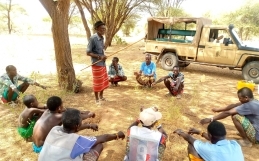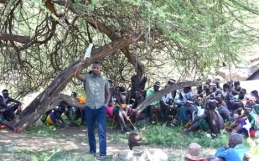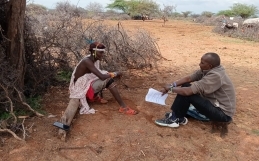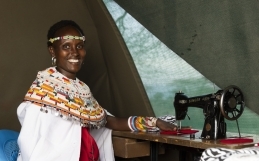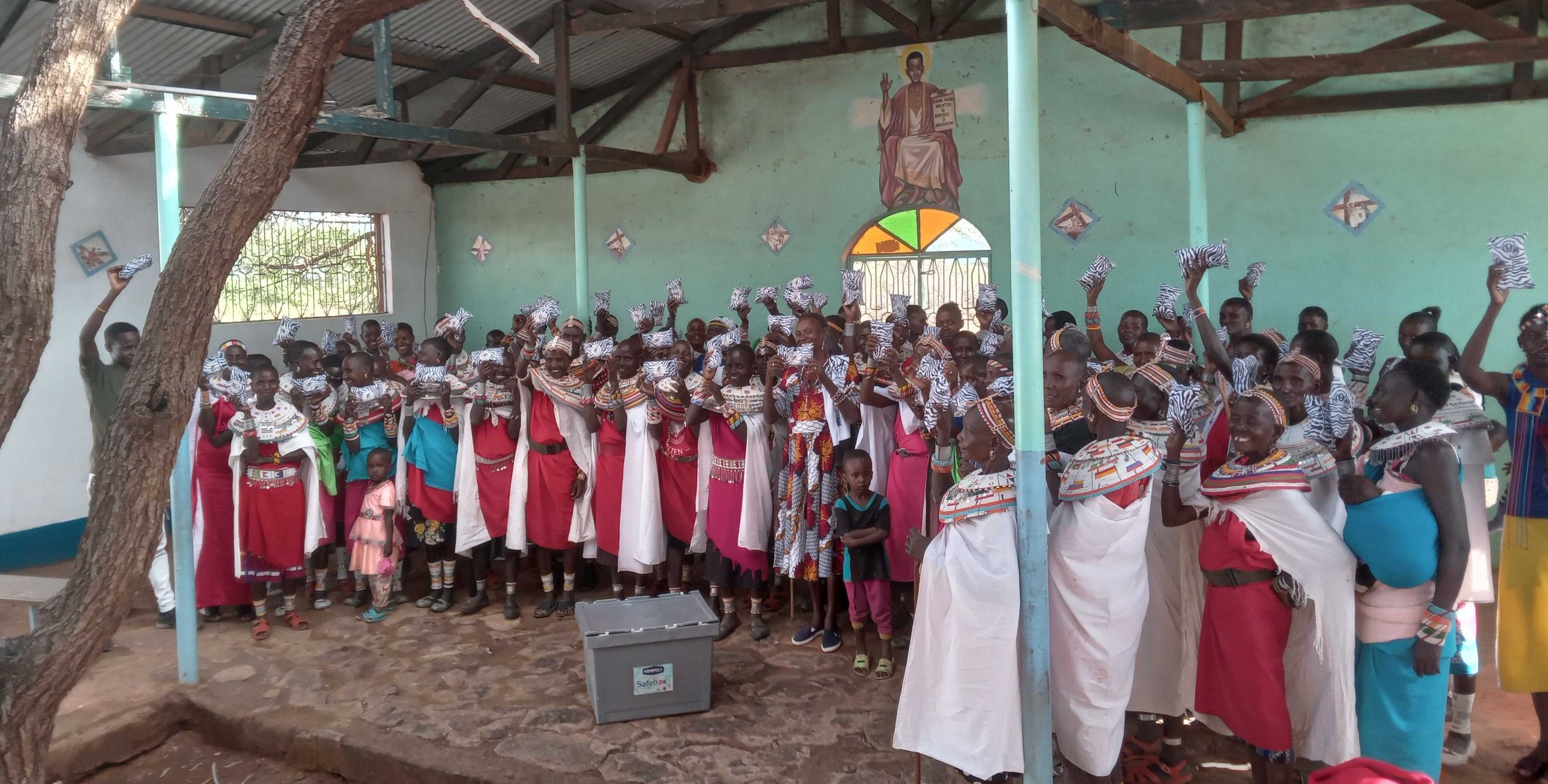
In Samburu culture, the Loip is a traditional women’s meeting, a space where women gather to discuss health, share knowledge, and support one another. It is within this trusted, community-rooted platform that some of the most meaningful conversations about women’s wellbeing take place. It is also where the Nkirreten project has found a natural home, convening these gatherings and distributing zebra-striped Dignity Packs to empower women and schoolgirls to manage menstruation with dignity and reduce their exposure to social challenges.
During a particular loip held in 2025, women were deeply engaged in a discussion about women’s health when an elder arrived and requested two women to join him. The two women returned shortly with news: a woman from their village had been out herding goats and had gone into labour. She had managed to walk back, but now needed assistance. The two women who had first responded were not experienced in childbirth, so they returned to the loip to ask two older women who were expert midwives.
The loip participants were distracted with concern for the woman in labour, wanting to know if she was safe. Damaris stopped the meeting and went to the house. The woman had not yet given birth, and the midwives were assisting her through the process. Then Damaris heard it—the cry of a newborn baby. Everyone was relieved and happy, but immediately asked, “What’s next?”
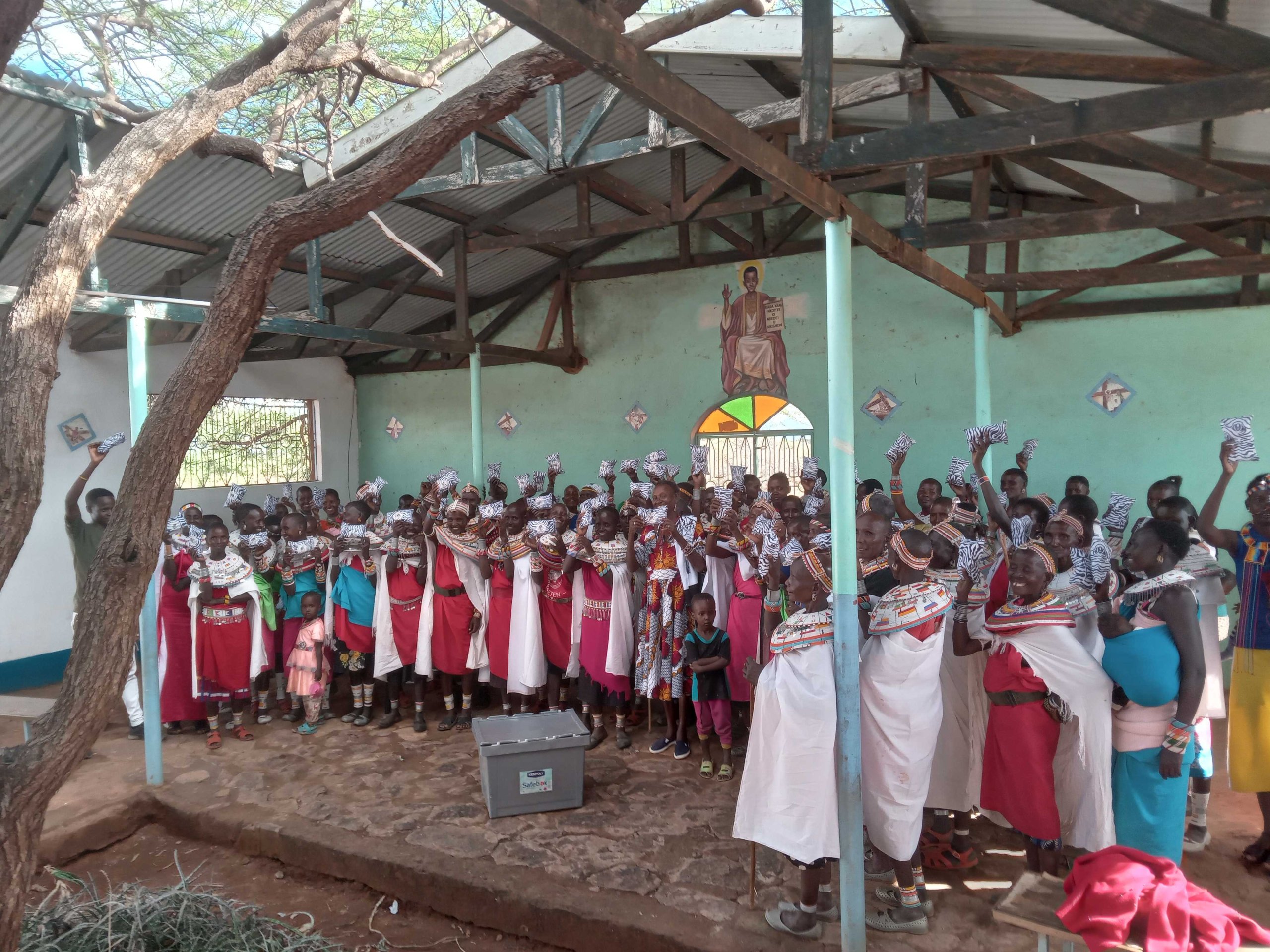
A loip held in Meibae Conservancy.
The midwives insisted that the mother needed to go to the clinic to ensure she was well. The woman was extremely weak. Not only had she just given birth, but she had been in labour while herding the goats far from the village and had only realised her condition when labour was advanced, forcing her to walk the entire distance back. The GZT vehicle was already at the village for a planned distribution of Dignity Packs, so the team covered the seats with a tarp to transport her. However, they first needed permission from her husband, who was out checking on the goats she had left behind. Someone fetched him, and he returned to give his consent.
The reusable sanitary pads from the Nkirreten project’s Dignity Packs were used to help manage bleeding during transport. At the clinic, a nurse was present and the woman was given IV fluids to help her regain her strength. Once she was settled, Damaris and the driver returned to resume the loip and continue the original discussion—women’s health. The topic now felt intensely real and practical rather than theoretical. The women discussed what needs to be done when a woman gives birth, highlighting the value of combining traditional practices (the midwives who helped with delivery) and modern medicine (taking her to the clinic afterwards when she was weak).
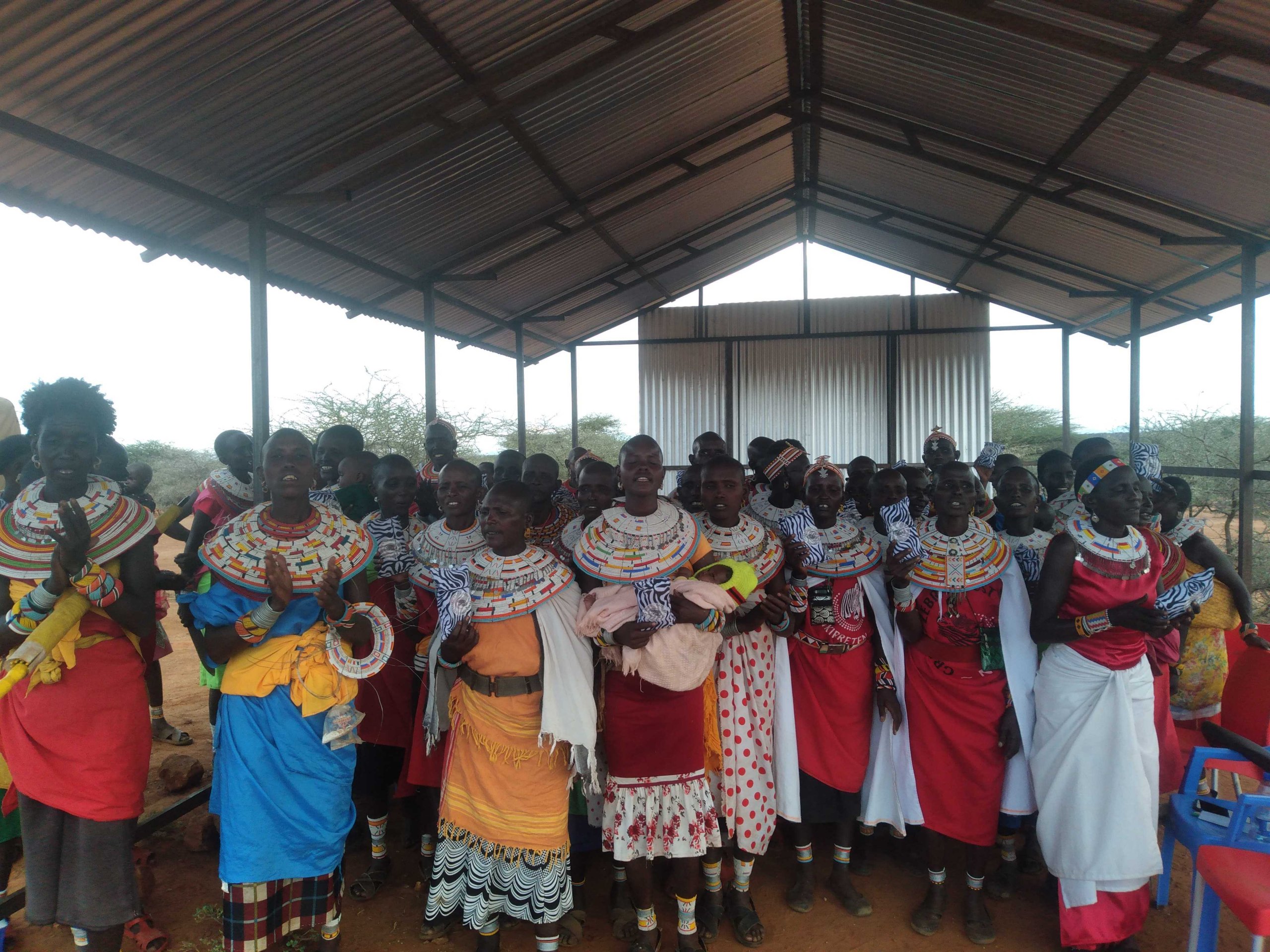
Loips provide a chance for women to come together and enjoy each other’s company and talk about important topics.
The women in the loip credited GZT with genuinely helping the situation, saying, “If there was no conservation, there wouldn’t have been a vehicle to transport her to the clinic.” This type of intervention, although not directly conservation-related, increases the community’s value of conservation. Following this, the team was able to distribute the Dignity Packs to the women as originally planned.
As conservationists, GZT must focus on conservation goals while also acknowledging and responding to the realities of the community. The organisation has resources such as vehicles and educated staff like Damaris who understood that the woman needed to reach the clinic. This incident demonstrates the importance of being part of the community in ways that build trust and value for conservation work.